Have any question?
Call (252) 449-7603
Call (252) 449-7603


A friend of mine runs a successful firm, and like many owners, he’s been looking for ways to trim overhead. He told me, with a bit of a proud grin, that he saved a few thousand dollars this year by simplifying his IT stack and letting go of his managed security plan in favor of a basic off-the-shelf antivirus.
He asked me if it was all essentially the same stuff anyway.
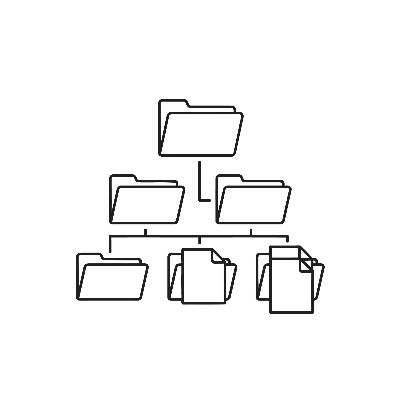
Most businesses are sitting on a mountain of data, but they’re treating it like a junk drawer. Adding a fancier drawer—like some five-figure AI-powered document management suite—doesn't help if you’re still just tossing stuff in there.
You probably don't need more software. You need a system. Before you go spending money on a solution for a headache that shouldn't exist in the first place, you need to look at how you handle the information you already have.

I was talking to a long-time colleague the other day about his firm's recent brush with a compliance audit. He’s the type of owner who prides himself on having his ducks in a row, but he sounded rattled. He’d just received a formal notice regarding how his team was handling customer data, and his first instinct was confusion. He thought that because he had an antivirus and a firewall, he was covered.
Imagine one of your employees receives a phone call from someone who sounds exactly like you. They have your cadence, your "ums," and even that specific way you clear your throat before getting down to business. Would they be able to tell it’s a deepfake, or would they follow the instructions to urgently reset a password or move funds?
If you can’t answer that with an emphatic "yes," you’ve got some work to do. We’ve moved far beyond the era of the Nigerian Prince emails and obvious typos. We are now in the age of highly polished, AI-driven social engineering where the "bad guys" are using your own identity against your team.
Modern gadgets make running a business easier. From smart thermostats and lightbulbs to connected coffee machines, the Internet of Things (IoT) brings a lot of convenience to the workplace. However, because these devices are built for speed and low cost, they often skip the security features your business actually needs.
Essentially every smart device in your office is a potential digital back door for hackers. Let’s take a look at how IoT—as helpful as it can be—can also be a big problem.

In 2026, technology isn't just a support department—it's the engine of your business. But as tools like AI and cloud computing become more accessible, the margin for error has narrowed. A single misstep can lead to data breaches, wasted budgets, or total operational paralysis.
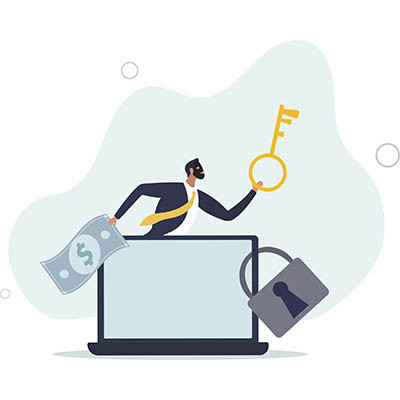
Getting hit with ransomware feels like a digital kidnapping. Your files are locked, your business is paralyzed, and some hacker is demanding a massive bag of crypto to give you the keys back.
It’s tempting to just pay up to end the nightmare, but here’s the reality: Don’t do it. Even though attacks are hitting record highs this year, fewer people are actually paying than ever before. Here is why ghosting the hackers is the only winning move.

Sometimes the toughest lessons that hurt the most are the ones we need the most, as is the case with anything cybersecurity related. You don’t want to experience a data breach, regardless of how it’s caused, but preventing them is a bit more challenging than you might at first expect. If you want to avoid losing time, money, and reputation needlessly, then take these three cybersecurity lessons into consideration today.
For literal decades, we heard that a good password required a few key traits to be secure: a capital letter, a number, and eight characters. How times have changed, right?
Now, the baseline standards are similar… just multiplied to the nth degree. Let’s discuss why this is, what modern businesses now need to do, and how we can help to maintain password security moving forward.
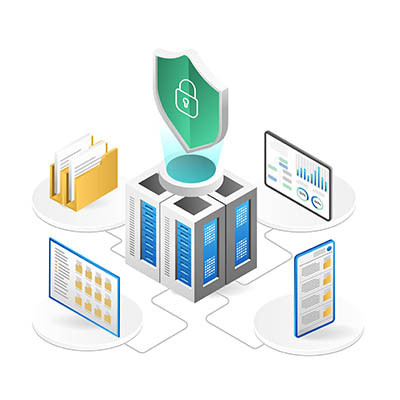
We’ve all heard the old proverb: “Data doesn’t exist unless it’s in three places.” For years, the 3-2-1 backup strategy was the industry gold standard. It was simple, effective, and kept us safe from hardware failures and accidental deletions.
However, the threat landscape has shifted. With the rise of sophisticated ransomware that specifically targets backup repositories, the traditional rule has evolved. Enter the 3-2-1-1 rule, the modern blueprint for organizational resilience.

One of the inevitabilities of starting and operating a successful business is that your IT infrastructure will eventually outgrow itself. While you might have been able to start operations with just a couple of people, the same network that used to work just fine is likely bowing under the stress of additional employees and workstations. If you want to build a sustainable and reliable infrastructure, it’s best that you rely on experts who can help your company stay as competitive as possible, regardless of how much you grow.

We all have that one person. The "rockstar." They answer emails at 11 p.m., they juggle four projects at once, and they never say "that’s not my job." They move fast, they break things, and they get results.
They are also the person most likely to bankrupt your company before lunch.
It is 2026, and while we were promised flying cars, we mostly got smarter toasters and AI that can write poetry. Unfortunately, malicious actors got an upgrade, too. With AI-driven brute-force attacks now able to crack simple passwords in seconds, this technology just doesn't cut it anymore.
Your security is always our priority, but we are only half of the equation. You need to know how to protect yourself. Here is a quick refresher on the best practices for password creation and management to keep your digital life locked down tight.

As an IT professional, I often see a massive gap between the security protocols we build and how users actually behave. We can spend millions on firewalls and encryption, but the biggest vulnerability is almost always the human element.
In the industry, we often say that security is only as strong as its weakest link, and unfortunately, that link is often a person who simply does not realize they are being targeted. Here are four ways people remain dangerously oblivious to cybersecurity threats.
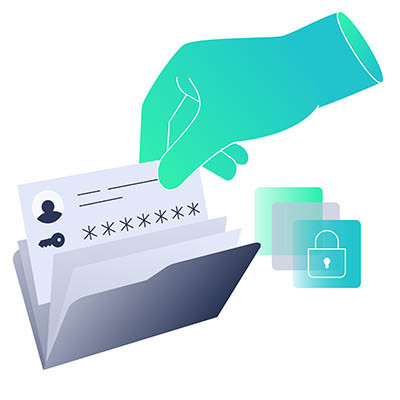
The password has long been the most important security tool because it is the most widely used. From a backend perspective, integrating a password manager isn't just as a digital vault, it helps build a comprehensive security framework.
This month, we thought we’d explain why the password manager is a must-have for your business and how to integrate one effectively.

The conversation around B2B data security is no longer about having a backup, but about whether your backup actually works when you need it most. Data backup and disaster recovery solutions were once seen as “set it and forget it” tools, but this is no longer the case. In reality, your data backup strategy is much more complex, and if you fail to give it the attention it deserves, it could result in an extinction-level event for your business.
You may leave the house door wide open when you step out to grab the mail. Sounds reasonable, but if a stray cat were to wander in, that was the risk you ran. The same logic applies to your digital life. Locking your computer, tablet, or phone screen is one of the simplest yet most effective steps you can take to protect your privacy and security.
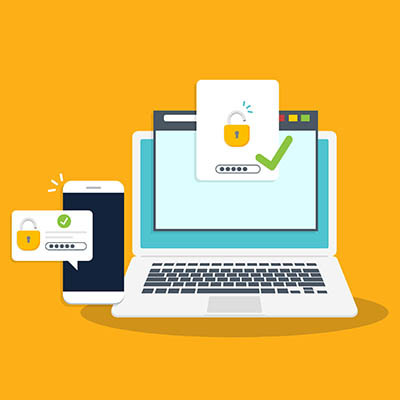
The scariest threats out there are the ones that can crack your network without you even realizing it. That’s right, they’re using stolen credentials that they tricked your employees into handing over through a phishing attack. The good news, though, is that a simple multi-factor authentication solution (MFA) can be a significant step forward for your network security, and the simple act of having one makes your business much safer and less prone to cybersecurity breaches.
If you haven’t yet implemented MFA, here are three logical steps you can take to move in the right direction.

So, you’re starting a business, and every dollar goes toward growth, marketing, and making your product awesome. Technology is probably just that thing you need to check emails and run Wi-Fi.
That mindset is dead wrong.
If you treat technology as an afterthought, you're stacking the deck against yourself. Your business runs on technology, and it can either be your secret weapon or your silent killer. This month, we go into four brutal, non-technical truths you must accept about your business tech right now.

When you send someone within your business an email, the expectation is that they will read it and respond accordingly. Unfortunately, messages can sometimes slip through the cracks, especially for small businesses with limited staff and an impossible workload to keep up with. If you primarily use email to communicate with your team, you need an email archiving system that can help ensure lost emails aren’t setting your business up for disaster.
Our network audit will reveal hidden problems, security vulnerabilities, and other issues lurking on your network.
Learn more about what Shoshin Technologies Inc can do for your business.
Shoshin Technologies Inc
3116 North Croatan Hwy. Suite 103
Kill Devil Hills, North Carolina 27948