Have any question?
Call (252) 449-7603
Call (252) 449-7603

It is 2026, and while we were promised flying cars, we mostly got smarter toasters and AI that can write poetry. Unfortunately, malicious actors got an upgrade, too. With AI-driven brute-force attacks now able to crack simple passwords in seconds, this technology just doesn't cut it anymore.
Your security is always our priority, but we are only half of the equation. You need to know how to protect yourself. Here is a quick refresher on the best practices for password creation and management to keep your digital life locked down tight.

As an IT professional, I often see a massive gap between the security protocols we build and how users actually behave. We can spend millions on firewalls and encryption, but the biggest vulnerability is almost always the human element.
In the industry, we often say that security is only as strong as its weakest link, and unfortunately, that link is often a person who simply does not realize they are being targeted. Here are four ways people remain dangerously oblivious to cybersecurity threats.

We talk about VoIP like it’s a magic bullet for small businesses—and it often is. But here is the catch: it is not a set-it-and-forget-it solution. To get the actual value out of your investment without driving your employees and clients to the brink of frustration, you need precision and planning.
If you are looking to upgrade your communications, here are three critical implementation hurdles you need to clear to ensure your transition is seamless.

One of the inevitabilities of starting and operating a successful business is that your IT infrastructure will eventually outgrow itself. While you might have been able to start operations with just a couple of people, the same network that used to work just fine is likely bowing under the stress of additional employees and workstations. If you want to build a sustainable and reliable infrastructure, it’s best that you rely on experts who can help your company stay as competitive as possible, regardless of how much you grow.

When businesses first migrate to the cloud, the promise is almost always the same: limitless scalability, faster innovation, and lower upfront costs. Unfortunately, that pay-as-you-go dream can quickly turn into a pay-more-than-you-thought nightmare. Recent industry data suggests that organizations typically overspend by 25-to-35 percent on their cloud resources. Without visibility, you aren’t just paying for what you use; you’re paying for what you forgot you were using.

Ubiquitous technology, used correctly, makes your business a powerhouse. Used poorly, it turns your company into a ghost ship, technically efficient but completely disconnected from your customers.
Some businesses are currently racing to replace their staff with AI. While they might save money upfront, they are often building a wall between themselves and the people they serve. Here is why keeping a human in the loop is actually your greatest competitive advantage.
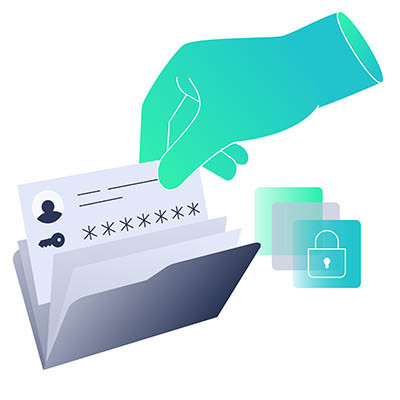
The password has long been the most important security tool because it is the most widely used. From a backend perspective, integrating a password manager isn't just as a digital vault, it helps build a comprehensive security framework.
This month, we thought we’d explain why the password manager is a must-have for your business and how to integrate one effectively.
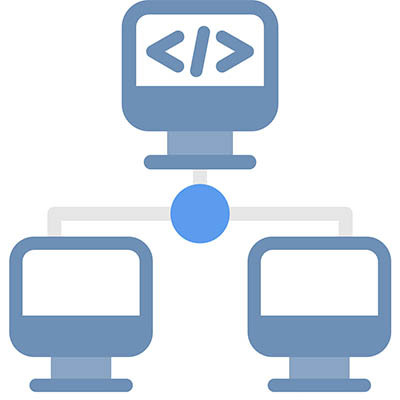
When a workforce spans multiple geographic regions, the network transitions from a standard utility to the company’s core nervous system. If the architecture is fragmented, the business becomes latent. From a systems engineering perspective, expansion requires a shift toward a resilient, software-defined framework.
Here is the technical breakdown of the non-negotiables for a multi-site rollout.

Most businesses don’t have what it takes to survive a hardware failure or natural disaster, and we don’t mean in terms of “grit.” What we mean is in the sheer technological capacity to recover their data and continue operations. It’s bizarre, too, how easy data backup can be, provided you follow these three key tenets. With a little help from a qualified backup professional, your business can stay resilient even in the worst of times.

The conversation around B2B data security is no longer about having a backup, but about whether your backup actually works when you need it most. Data backup and disaster recovery solutions were once seen as “set it and forget it” tools, but this is no longer the case. In reality, your data backup strategy is much more complex, and if you fail to give it the attention it deserves, it could result in an extinction-level event for your business.
You may leave the house door wide open when you step out to grab the mail. Sounds reasonable, but if a stray cat were to wander in, that was the risk you ran. The same logic applies to your digital life. Locking your computer, tablet, or phone screen is one of the simplest yet most effective steps you can take to protect your privacy and security.

The scariest threats out there are the ones that can crack your network without you even realizing it. That’s right, they’re using stolen credentials that they tricked your employees into handing over through a phishing attack. The good news, though, is that a simple multi-factor authentication solution (MFA) can be a significant step forward for your network security, and the simple act of having one makes your business much safer and less prone to cybersecurity breaches.
If you haven’t yet implemented MFA, here are three logical steps you can take to move in the right direction.

As an IT professional, I'm used to dealing with change. It's the nature of the job. What we're experiencing now isn't just change, it's an exponential acceleration of innovation. The rate at which new technologies are emerging, maturing, and disrupting entire industries is faster than ever before. This velocity shift isn't a random event, it’s driven by three key factors coming together in perfect harmony. This month, we will take a look at them.

So, you’re starting a business, and every dollar goes toward growth, marketing, and making your product awesome. Technology is probably just that thing you need to check emails and run Wi-Fi.
That mindset is dead wrong.
If you treat technology as an afterthought, you're stacking the deck against yourself. Your business runs on technology, and it can either be your secret weapon or your silent killer. This month, we go into four brutal, non-technical truths you must accept about your business tech right now.

It's one of the most recognizable icons in modern digital design: three short, horizontal lines stacked neatly together. You've seen it countless times, representing the main menu on nearly every website and application. Sometimes it transforms into three dots—a "kabob" menu, if you want a fun fact, but its function remains the same: it's the gateway to everything your site has to offer.

For all its benefits, remote work has certainly created some challenges. One major issue is the lack of visibility you have over your employees and the ramifications that could result.
While it is critical to cultivate trust in and with your employees, you also need tools to monitor progress and hold your team members accountable. Let’s talk about some of the issues you may discover once we give you the visibility you need.

We see the endpoint—that includes every laptop, desktop, server, mobile device, and IoT gadget connected to your network—as the front line of your defense. Failing to secure every single one of these points is not just a risk; it's an invitation. You need to identify all the endpoints on your network and work to secure them. Here’s why, and how.

Have you ever noticed how, by default, Windows might not open your programs in the maximized state? That’s because the normal state that it defaults to doesn’t fill the entire screen. While you could always just maximize the window yourself, wouldn’t it be helpful if the windows simply defaulted to opening in their maximized state?
Well, you can, and it’s as easy as can be through the Properties menu.

From the classic Nigerian Prince emails to the cleverly crafted fake invoice, malicious digital correspondence is a constant, evolving threat to any business. It's not just about losing a few dollars, either. A successful phishing attack can cripple your operations, compromise sensitive data, and even lead to devastating financial and reputational damage.

Technology unlocks incredible potential, but is also constantly stalked by an increasingly sophisticated adversary: cybercrime. For businesses of all sizes, threats are changing faster than ever, driven by new technologies and a highly organized criminal industry.
To protect your profits, reputation, and continuity, your business can no longer rely on yesterday’s defenses. You need to understand the evolution of the threat and implement a proactive, multi-layered strategy.
Our network audit will reveal hidden problems, security vulnerabilities, and other issues lurking on your network.
Learn more about what Shoshin Technologies Inc can do for your business.
Shoshin Technologies Inc
3116 North Croatan Hwy. Suite 103
Kill Devil Hills, North Carolina 27948